
Heatwaves: How to Keep Your Grass Green and Plants Healthy
With Met Éireann’s recent yellow weather warning for high temperatures, it is important to keep your lawn and plants cared for with this guide.
It is vital to watch out for the following signs to see if your lawn is under stress:
Cracks in the soil, crunchy grass, weed growth, no grass growth, thinning, patching, wilting, scorching, and discolouration.
If your lawn is showing these signs, or if you want to prevent them, here is what you can do;
If you have overlooked watering your lawn, do not panic yet. According to Peter, in an article from House Beautiful (Joyner, 2026), well-established lawns are resilient enough to survive short heat waves naturally. If there is a period of prolonged heat, watering in the early morning or evening, when it is cooler, is advisable. To further protect your lawn, avoid going onto the grass and refrain from mowing during this time.
Potted plants, on the other hand, can dry out much faster and may require watering. A common trick to know if you should water them is to dip your finger into the soil as far as your knuckle. If your finger comes out dry, it's a sign to water the plant. If your finger comes out moist, you do not need to. You also do not need to water your plants daily.
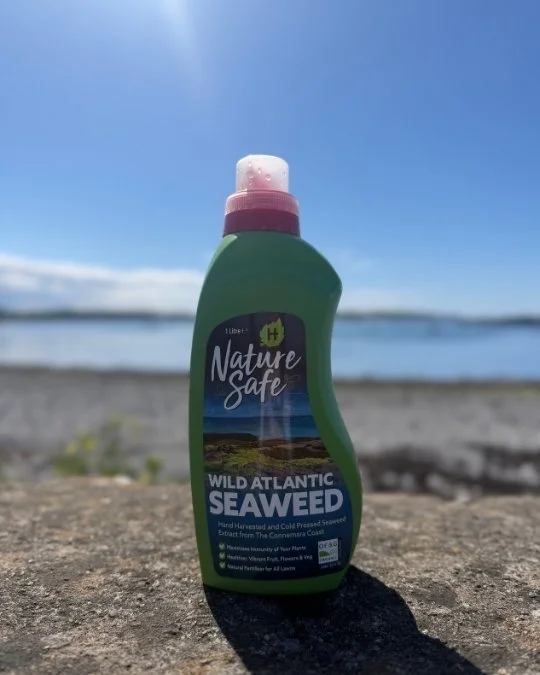
While watering is essential during periods of hot weather, it is also important not to overlook feeding your plants. Mark Sage, Lead Horticultural Buyer at B&Q advises that frequent watering can wash nutrients from compost, particularly in containers and pots, leaving plants less able to cope with heat stress (Dixon, 2026). It is advised to put a hold on feeding until the heatwave has passed, as plants will stop growing whilst under stress to protect themselves, and you want to prevent forcing new growth. Once temperatures regulate, feeding and replacing lost nutrients is a priority to help plants flourish.
Sage also suggests considering seaweed-based feeds, as other feeds have a carbon footprint. Our Nature Safe, Wild Atlantic Seaweed liquid feed would be ideal, helping to support root development, improve nutrient uptake, and increase resilience to environmental stresses such as heat and drought. As a natural, sustainable feed, it can be used across lawns, flowers, fruit, and vegetables to keep plants healthy throughout the summer months.
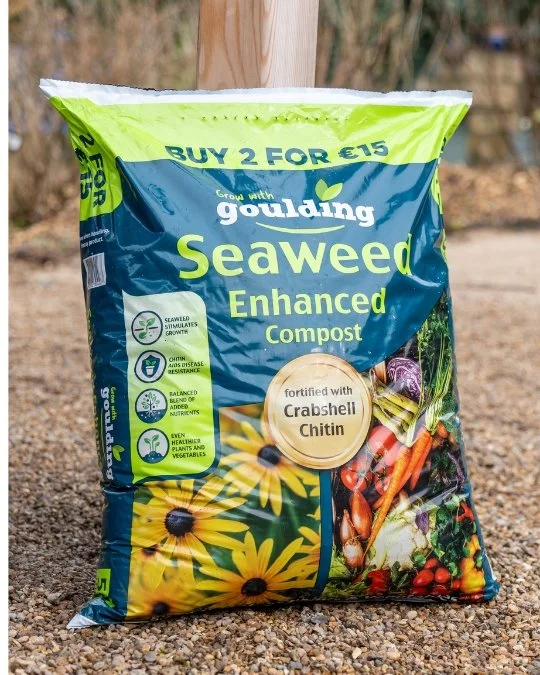
Plants growing in containers are particularly vulnerable during hot weather, as compost can dry out quickly and nutrients may be lost through frequent watering. Using a quality compost, such as Goulding’s Seaweed Enhanced Compost, can help. Enriched with natural seaweed, it supports strong root development, improves moisture retention, and helps plants remain healthy and resilient during periods of heat and drought.
Reference List Dixon, R. (2026) ‘lawns don’t need watering!’ how to garden in a heatwave, from recycling bathwater to making the most of Shade | gardening advice | the guardian. Available at: https://www.theguardian.com/lifeandstyle/2026/jun/23/lawns-dont-need-watering-how-to-garden-in-a-heatwave-from-recycling-bathwater-to-making-the-most-of-shade (Accessed: 26 June 2026). Joyner, L. (2026) Should you water your lawn during a heatwave? the answer may surprise you, housebeautiful.com. Available at: https://www.housebeautiful.com/uk/garden/plants/a71691118/should-you-water-lawn-heatwave/ (Accessed: 26 June 2026).